|
The Silk Road
The Silk Road is the legendary overland trade route from China to the capital of Rome empire. It connects two very contrasting worlds - East and West: the two cultures of Asia and Europe. Before the discovery of the sea route to the India, the Silk Road had contributed greatly to the exchange and development of ethical and material civilization between the East and West. Its last great era was in the time of Mongols. Macro Polo traveled from Kashgar to the East of China along the southern route. However its importance was lost quickly with the sea route developed. It existed from the 2nd century B.C. till the 16th century A.D.
From its beginin in the magnifcent ancient city of Chang'an (Xi'an), the Road took traders westward into Gansu Province through Lanzhou, Tianshui, Zhangye, Jiuquan along the HeXi Corridor with its mountains and deserts where it reached Jiayuguan-the giant barrier of the Great Wall. Here at Dunhuang, the first key point along the route, it divided into separate ways through Xinjiang region via Turpan, Urumqi, Korla until reachin Kashgar, the final point in China. Trips along the Road are a feast to the wyes and it abounds with fascinating historical records and priceless relics.
Its name comes from the first item of transit trade - Chinese silk, later beside silk, appeared other goods: jewellery, glass, iron etc. Silk Road has had a unique role in foreign trade and political relations, stretching far beyond the bounds of Asia itself. It has left its mark on the development of civilisations on both sides of the continent.
|
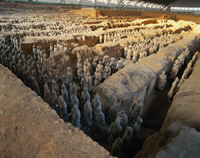
Xi'an
Terracotta Warriors and Horses
Shaanxi Provincial History Museum
Big Wild Goose Pagoda
Ancient City Wall
The Forest of Steles
Huaqing Pool ( huaqing hot springs )
Banpo Site ( Banpo Neolithic Village )
Grand Mosque
Detail
|
|
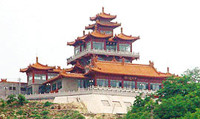 |
Lanzhou
Five Springs Park
White Pagoda Mountain
Provincial Museum
Grottoes of Bingling Temple
Liujiaxia Dam
Detail |
|
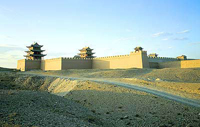 |
Jiayuguan
Jiayuguan Pass
Suspension Great Wall
Weijin Tomb-underground art gallery
Detail |
|
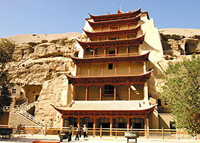 |
Dunhuang
Magao Grottoes
Crescent Spring Pool
Mingsha Mountain
Dunhuang Museum
White Horse Temple
Yumen Pass
Yangguang Pass
Detail |
|
 |
Urumqi
Nanshan Pasture
Tianshan Mountain
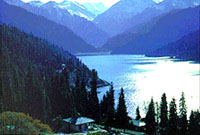
Heavenly Lake
Museum
Red Hill Park
Detail |
|
 |
Turpan
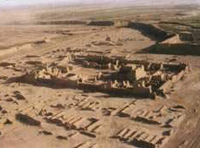
Gaochang Ruins
Karez Well
Sugong Pagoda (Emin Minaret)
Flaming Mountain
Grape Valley
Jiaohe Ruins
Astana Ancient Tomb
Thousand-Buddha Caves
Detail |
|
 |
Kashagar
Id Kah Mosque
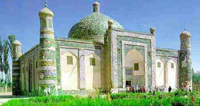
Tomb of Abakh Hoja
Sunday Bazaar
Detail |
| |
|
|
| Other City |
|
 |
| Private China Tours |
|
|
|



